
160 years of history, between resilience and innovation
160 years of industrial history that haven’t always been smooth sailing… While Chantiers de l’Atlantique has always built large ships, there were times when, due to economic uncertainties, it had to explore other sectors. Alongside shipbuilding, which was slowing down around the 2010s, the shipyard made a strategic shift towards the promising emerging markets of marine renewable energies. Then orders came back for XXL cruise ships that are today among the most innovative in the world and give Saint-Nazaire an international reputation. This resilience, forged through collective strength, is one of its defining characteristics.
The birth of ocean liners in the 19th century…
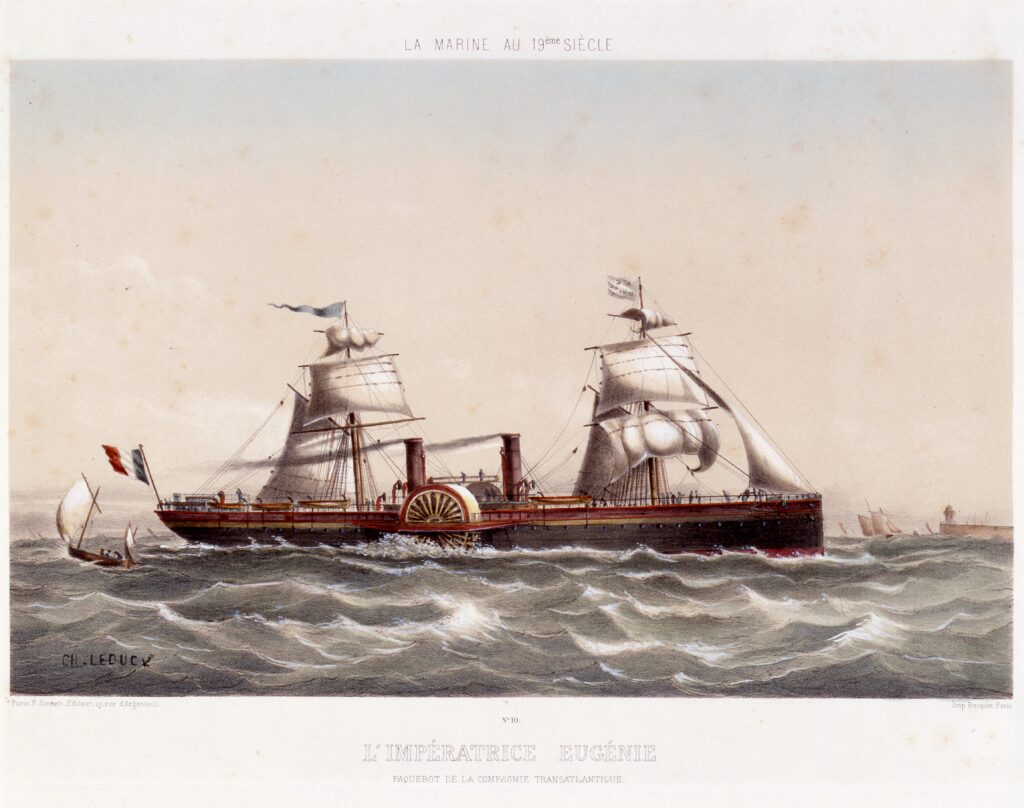
To tell the story of Chantiers de l’Atlantique, we must go back to the 19th century. At its origin is the shared history of two cities, Nantes and Saint-Nazaire, whose destinies were closely linked to their port. Indeed, in the mid-19th century, Nantes decided to move its port to Saint-Nazaire. At that time, Saint-Nazaire had only about 1,000 inhabitants. Under the impulse of the State, the first regular routes to South America were established, and the State required the construction of French ships. The Pereire brothers founded the Compagnie générale transatlantique and launched the first shipyard in Saint-Nazaire. What followed is well known: the shipyard delivered its very first transatlantic liner, l’Impératrice Eugénie, launched in 1864 — the first in a long series that continued with subsequent deliveries by Chantiers de l’Atlantique.
In the mid-19th century, Nantes decided to move its port to Saint-Nazaire. Saint-Nazaire then had only 1,000 inhabitants.
From passenger transport to wartime effort
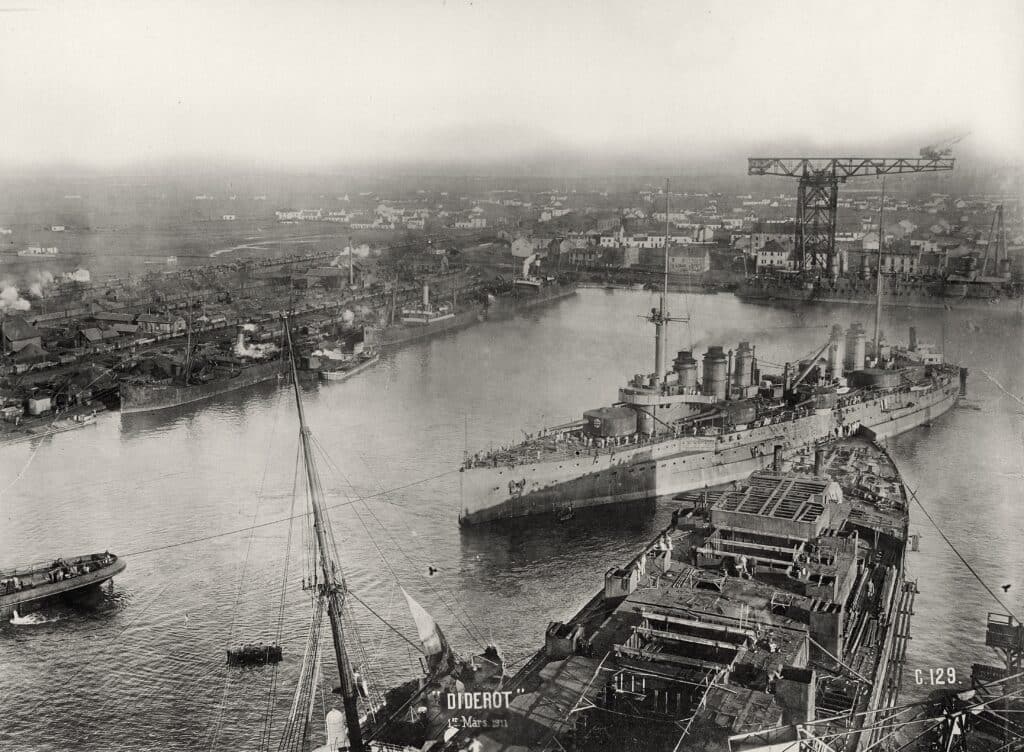
The early years of shipbuilding in Saint-Nazaire were somewhat chaotic. With the First World War, American forces arrived and brought new energy to the city. It was during this period that the race for the Blue Riband began — a prize awarded to the fastest ships on the transatlantic route between England and North America. During the interwar years, Chantiers de l’Atlantique continued to produce passenger liners in large numbers, and this era saw the birth of Saint-Nazaire’s most iconic ocean liners. Then came the near-total destruction of the shipyard during the Second World War, followed by its reconstruction afterwards.
A major turning point occurred in the 1960s, as reliable long-distance air travel began to supplant ocean liners as the primary means of cross-continental passenger transport. From 1960 onwards, passenger liners all but vanished from Saint-Nazaire’s order books.
The first real turning point occurred in the 1960s, when commercial airliners became reliable and capable of carrying passengers over long distances.
From prosperity to the arrival of Asian competition
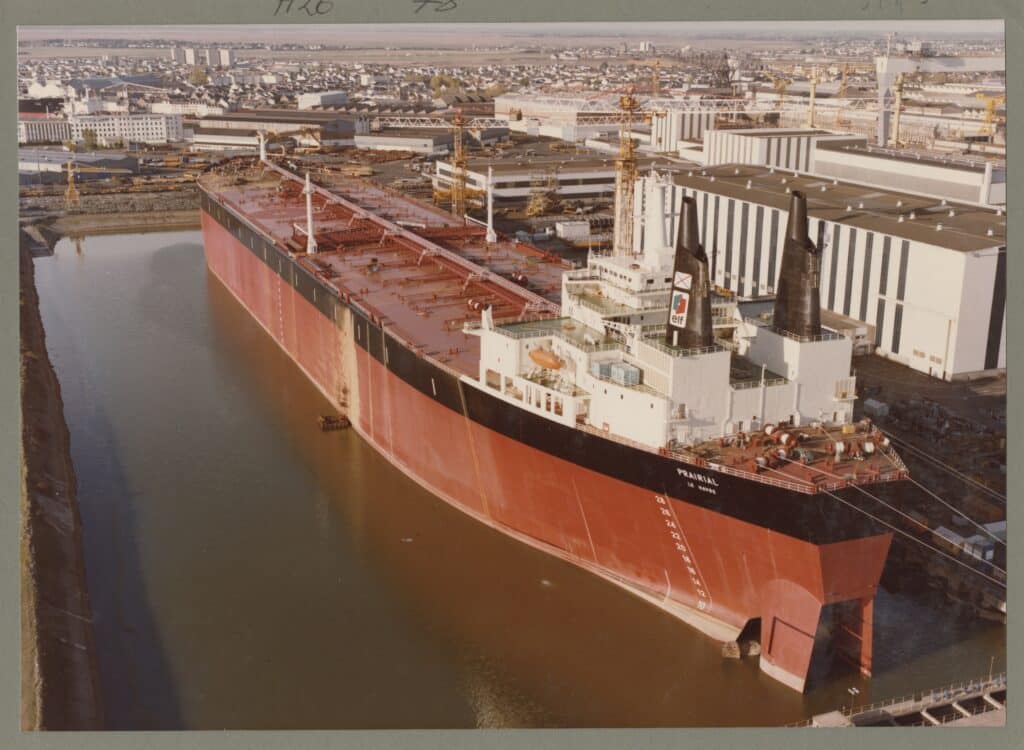
In the 1960s, with the boom in fossil energy, the shipyard became a major builder of oil tankers. Between 1965 and 1975, the yard was completely redesigned into the configuration it still largely retains today. Thanks to major investments in design tools, it became one of the most advanced shipyards in the world. Unfortunately, with the oil crises, the shipyard went through a very difficult period from 1975 to 1985, while Asian competitors established themselves in the market.
Unfortunately, with the oil shocks, the shipyard went through a very difficult period from 1975 to 1985.
From passenger transport to cruising
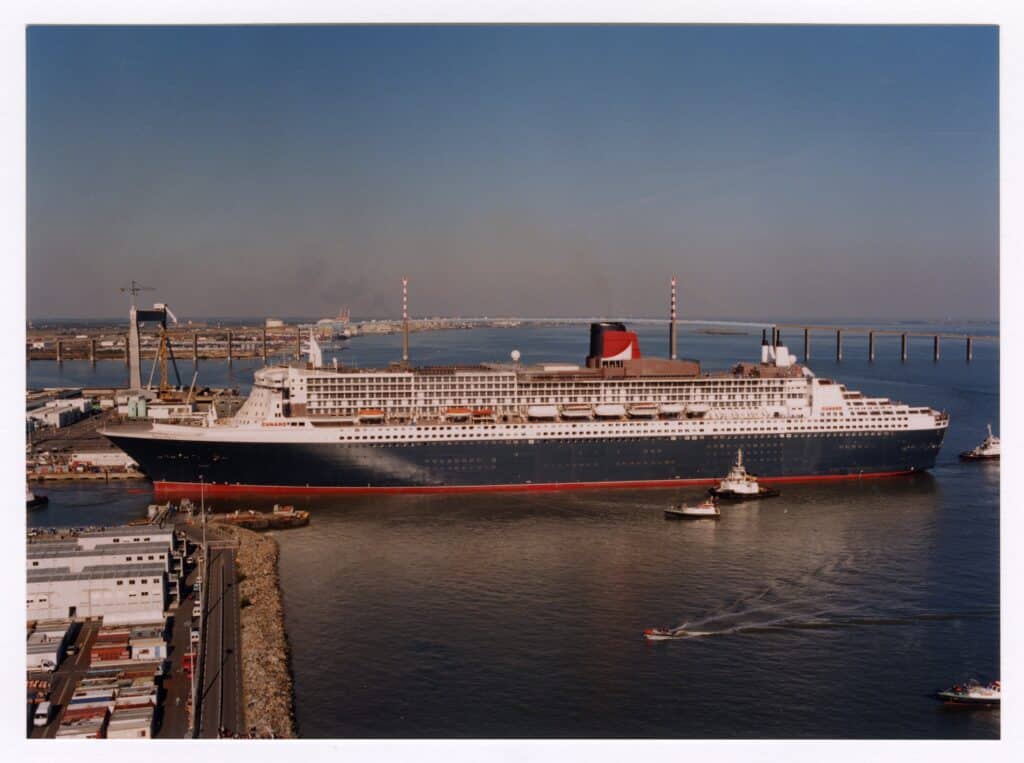
From 1985 onward, the ocean liner was no longer a means of intercontinental transport but a leisure experience — a very American-style “cruise to nowhere.” The major shift began with the signing of the Sovereign of the Seas contract for Royal Caribbean Cruise Line, and Chantiers de l’Atlantique started to rack up successes in the new cruise market. There were still ups and downs, periods of doubt, and efforts to conquer new markets and technologies. Between 2005 and 2010, during the global financial crisis, the Alstom group sought to divest from the shipyard, which wasn’t profitable enough. At that time, the yard came under Korean ownership and became STX in 2017-2018 — a Korean period that quickly proved difficult.
Diversification as a response to crisis
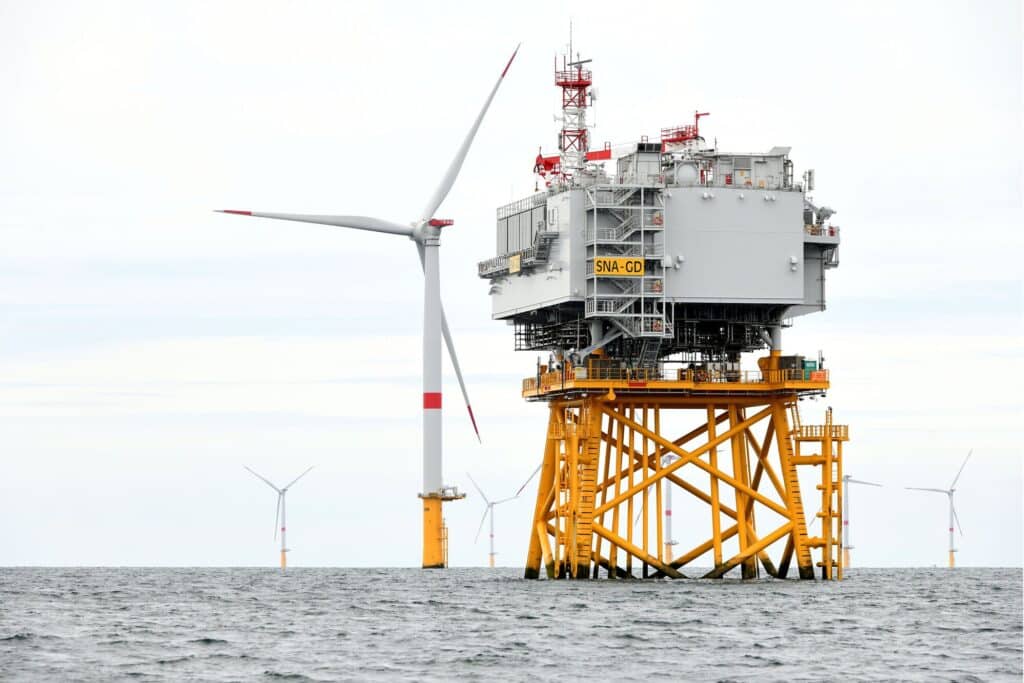
From the crisis with the Koreans, the shipyard learned a key lesson: excessive specialization was detrimental to its future. It began to explore marine energy sectors, leveraging its extensive experience working with large steel assemblies. Discussions about potential offshore wind farms in France began to emerge, but progress was slow. The first offshore wind farm off Saint-Nazaire had not yet been definitively approved. Meanwhile, the shipyard inaugurated its first offshore electrical substation for a Danish client in the UK and then built more substations for wind farms in Northern Europe and soon for French fields — a successful venture that is expected to represent 20-25% of revenues.
Following the crisis with the Koreans, the shipyard diversified and turned toward marine energy.
Design and technological expertise for XXL liners
On July 18, 2018, France temporarily nationalized STX France, which officially became Chantiers de l’Atlantique again. In the meantime, from 2013 onward, record orders for ever-bigger cruise ships had returned. The shipyard’s challenge became to be creative and innovative to meet clients’ demands for increasingly distinctive vessels. Fortunately, it could rely on one of France’s largest design offices with nearly 1,000 engineers. Beyond client design requirements, there were technological innovations aimed at meeting new environmental regulations. Decarbonization became a central concern for shipyard engineers, both in terms of energy savings and new fuels. This is exemplified by the World Class Europa, one of the latest cruise ships from the yard, which consumes 40 % less energy compared with 2008 — the IMO reference year.
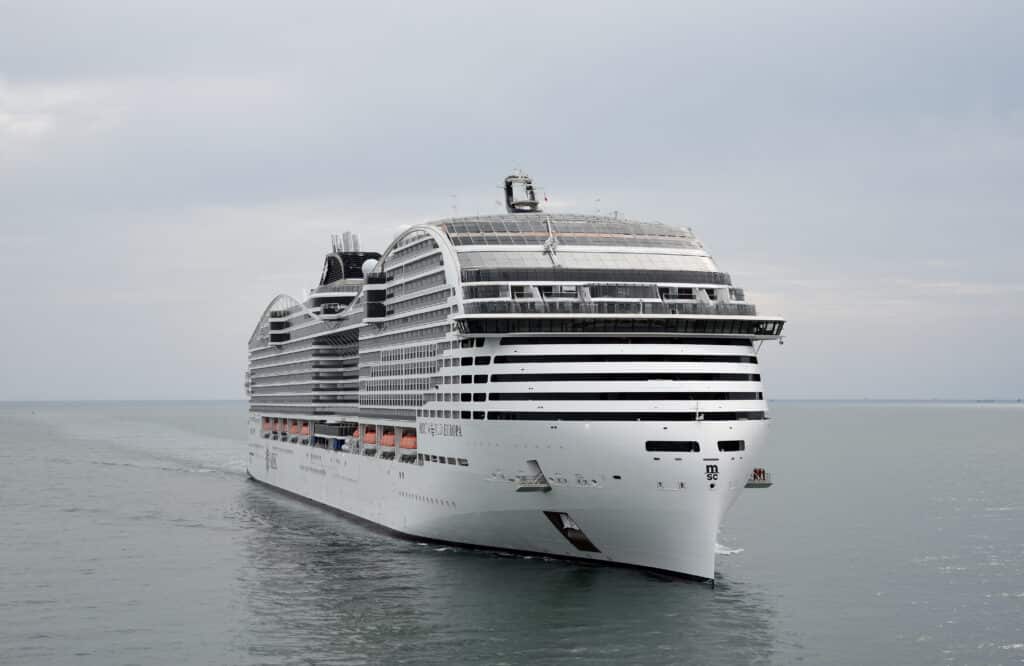
The World Class Europa, one of the latest cruise ships from the yard, consumes 40 % less energy.
4000
employees in Saint-Nazaire
1000
collaborators in design
1/3
of shipyard revenue expected from marine renewable energies in the next 10 years
-40%
energy consumption for the World Class Europa
Dual-fuel ships to meet environmental demands
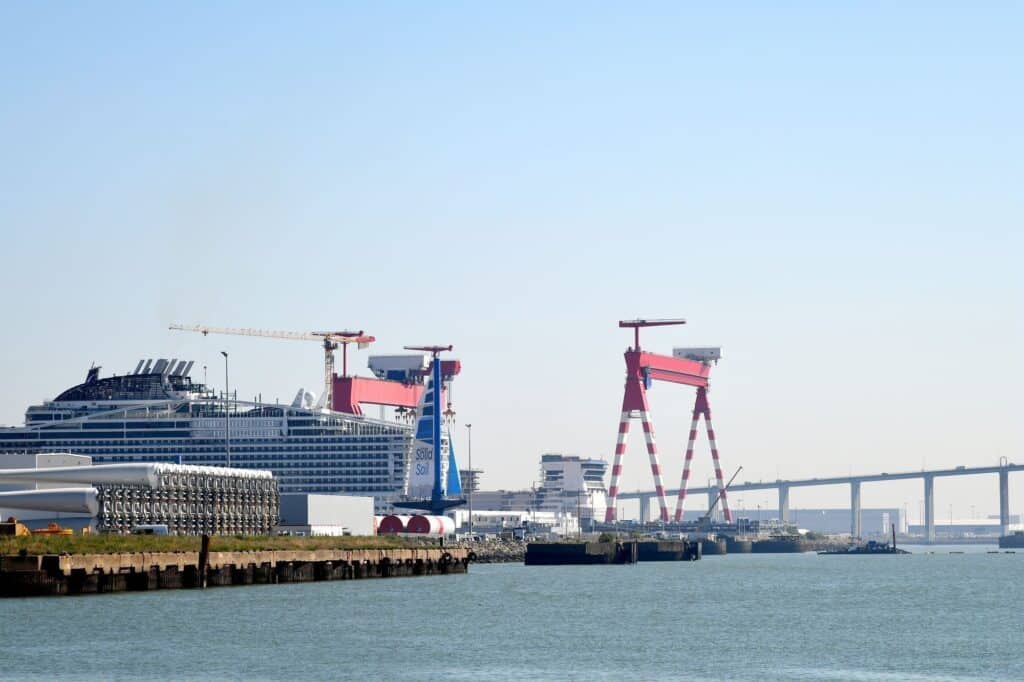
On the subject of new fuels, constructing dual-fuel ships — with diesel as backup — presents technological challenges. Due to insufficient investment, advanced fuels (bio-LNG, e-LNG, bio-methanol, or e-methanol) are still not widespread. The Zibac project in Saint-Nazaire aims in part to address this by producing green fuels in the port area. What about wind power? The shipyard believes in sail propulsion not only for cruise ships but also for cargo vessels. It is also a supplier of masts and sails for the Neoliner, inaugurated in October 2025 in Nantes — a promising local partnership. These early tests of sail-propelled vessels will be decisive for the future of this technology.
Charting the course for the next 10 years
Where will the shipyard be in a decade? Marine renewable energies could represent one-third of its revenue. Orders for cruise ships, if they can meet environmental constraints, should continue to pour in as the demand for leisure grows. In April 2026, the Orient Express Corinthian — a striking 200-meter-long sailing vessel, the largest ever built — will also be delivered. Demand will also come from military contracts, which already represent about 10 % of revenue. The maritime world is cautious, but despite uncertainties, it knows how to stay the course.
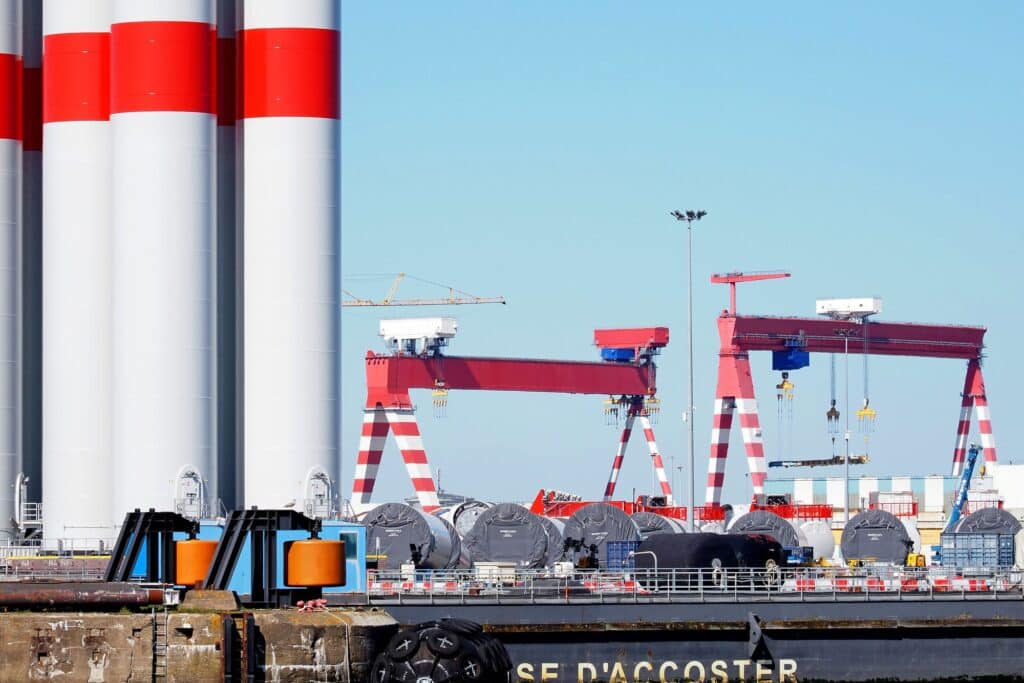
Photo credits / Saint-Nazaire Agglomeration Collection – Ecomuseum:
- Lithograph “L’Impératrice Eugénie” by Charles Leduc (1865)
- Battleship Diderot (1911) – Photographer unknown
- Oil tanker Prairial (1979) – Photographer unknown
- Ocean liner Queen Mary 2 (2004) – Photographer unknown