
Our expert
Let us discuss your project
Airbus is the driving force behind the aerospace sector. With 5,900 employees, its sites in Nantes and Saint-Nazaire make up Airbus’ second-largest industrial hub in France. The current momentum around Airbus also benefits a large network of subcontractors, supported by a thriving environment for innovation and R&D.
Rooted in shipbuilding and naval aviation expertise, the aerospace sector is a symbol of Nantes and Saint-Nazaire’s capacity for reinvention. As a global aerospace leader, Airbus operates two production sites here, making it France’s second-largest aerospace hub after Toulouse.
Subcontractors riding the Airbus momentum
With an order book securing visibility for over 10 years, Airbus attracts many subcontractors to Saint-Nazaire and Nantes. Companies like Figeac Aéro, Sogeclair, Dufieux Industries, Simra, and others have chosen proximity by setting up close to their key client. Among the major local aerospace companies, Stelia Aerospace—a 100% Airbus subsidiary since the 2015 merger of Aerolia and Sogerma—also supplies global manufacturers like Boeing, Bombardier, and Dassault.
Research, innovation, and training: A future-focused trio
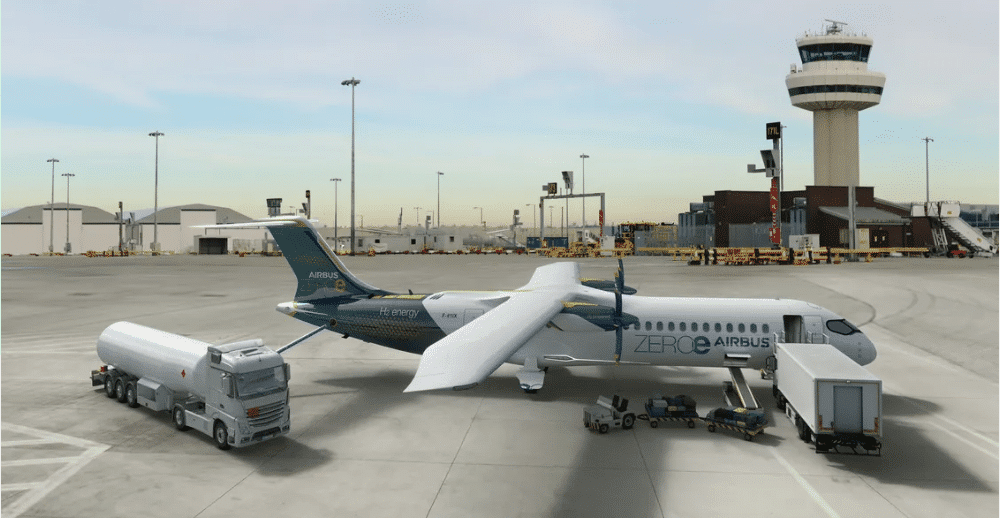
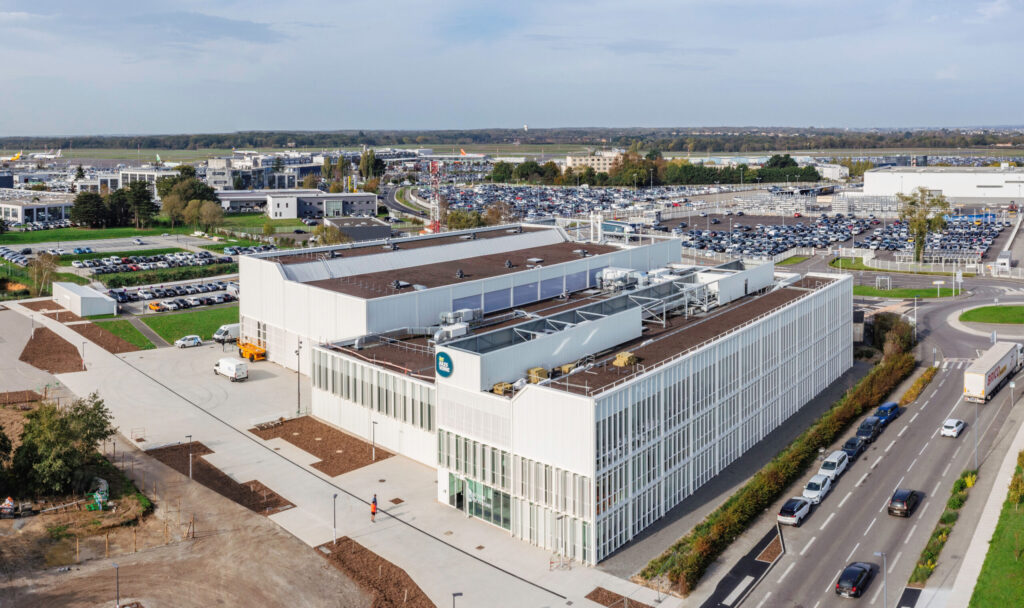
Public authorities actively support the growth of the aerospace sector. The Pays de la Loire Region initiated the creation of Technocampus EMC2, located near Airbus Nantes, dedicated to composite materials. It provides SMEs with access to state-of-the-art infrastructure and encourages collaborative projects alongside industry leaders. The Jules Verne Technological Research Institute (IRT), created through France’s “Investments for the Future” programme, works with the EMC2 Competitiveness Cluster to improve industrial performance in sectors like aerospace. The IRT Jules Verne integrates research, innovation, and training in advanced production technologies, supporting the factory of the future. At the heart of this dynamic is the Airbus Atlantic Technocentre, a key component of Airbus’ Zero Emission Development Centre (ZEDC) located in Nantes.
The factory of the future, happening today
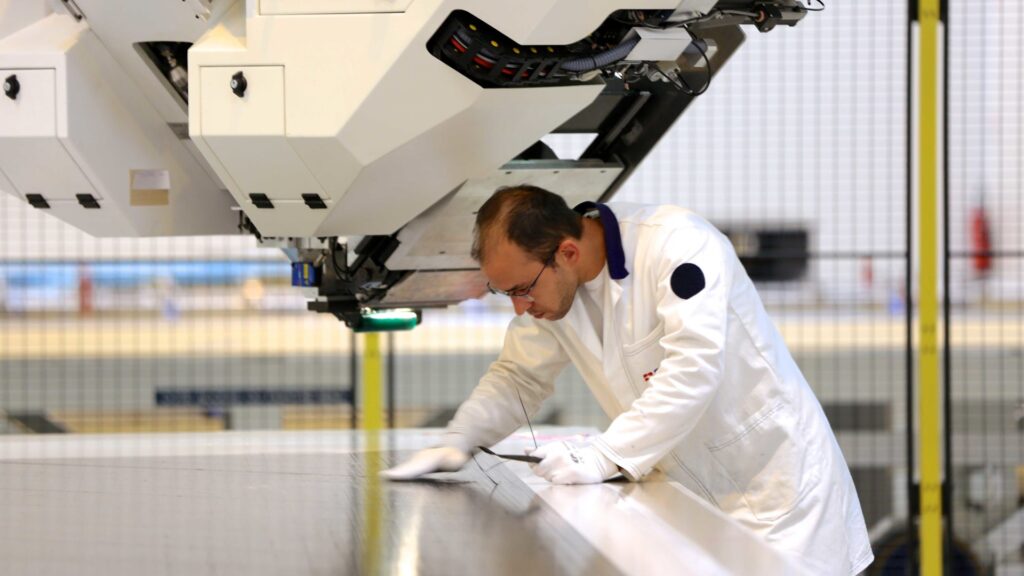
Daher’s factory in Nantes is among the first four technological projects certified by the “Alliance Industrie du Futur”, a national initiative uniting industry and digital actors to drive the “industry of the future” strategy.
A cluster approach to winning new markets
Industrial players are also betting on collaboration. Sixty-five aerospace SMEs are members of the Neopolia cluster, fostering alliances (consortia, co-contracting, etc.) to pool expertise and access larger contracts and new markets in the aerospace sector.
A major source of aerospace employment
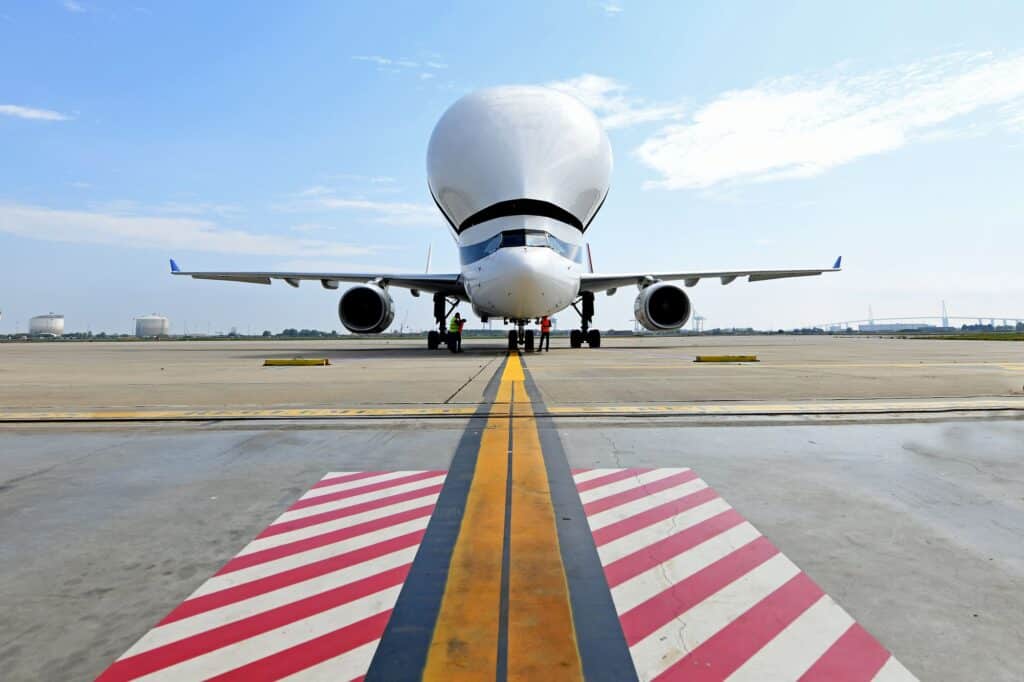
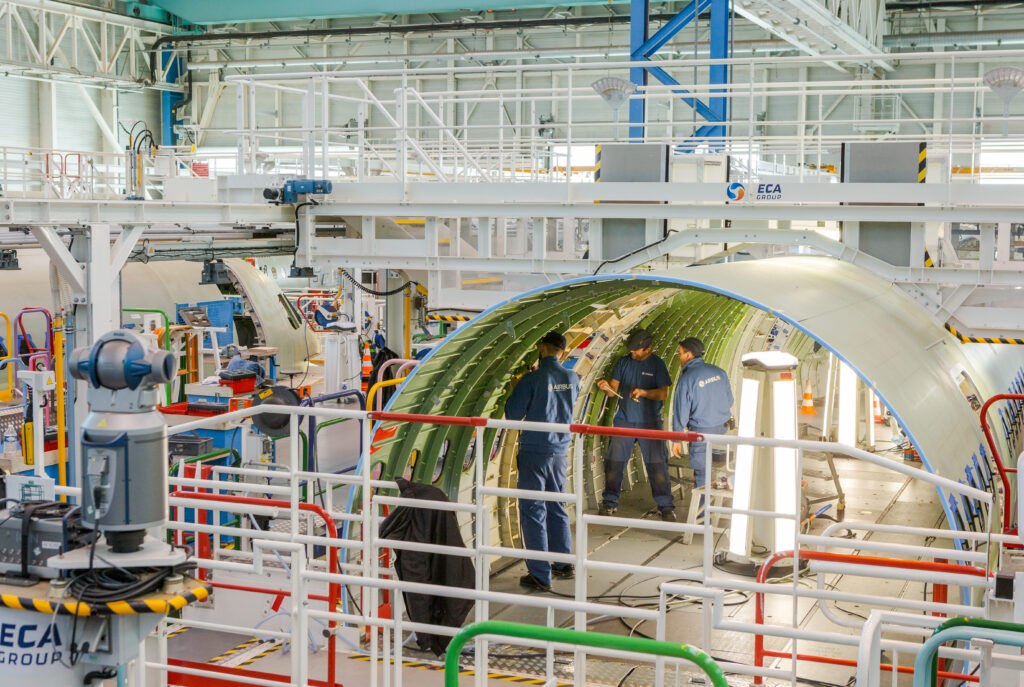
In Nantes, Airbus employs 5,900 people—3,200 in Saint-Nazaire and 2,700 in Nantes—plus several thousand subcontractor jobs. In Saint-Nazaire, teams produce forward fuselages and nose sections, handling integration, equipment, and testing of the forward and central fuselage sections for all Airbus aircraft. In Nantes, teams manufacture central wing boxes (wings), radomes, nacelle air intakes, and ventral beams. Today, the region produces approximately 60 aircraft per month.
Key figures
2nd
largest Airbus site in France
500
aerospace companies in Pays de la Loire, including 250 in Loire-Atlantique
25 000
aerospace jobs in the region, including 10,000 in Loire-Atlantique, of which 5,900 are at Airbus Nantes Saint-Nazaire
Key sub-sectors:
Reuse and circular economy
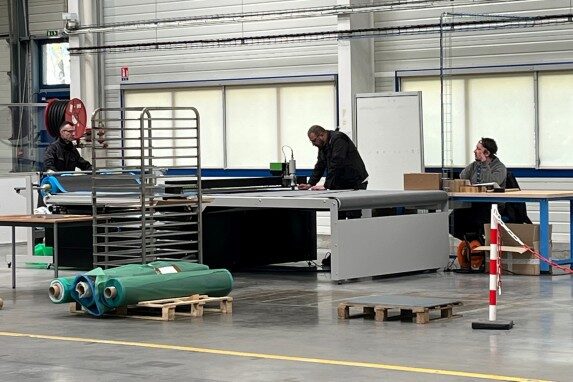
Reuse markets for carbon composites are still emerging, but there are stable material streams in the region thanks to local industrial players like Airbus and Daher, alongside academic and innovation actors. Fairmat, a local SME, developed an ultralight aircraft seat using composite production offcuts to reduce aircraft weight, showcasing circular economy innovation.

Composite materials
To reduce aircraft weight while maintaining high safety and performance levels, composite materials are a critical focus area in aerospace R&D. Technocampus EMC2, dedicated to composites, makes Nantes Saint-Nazaire France’s leading hub in this field.
Advanced production technologies
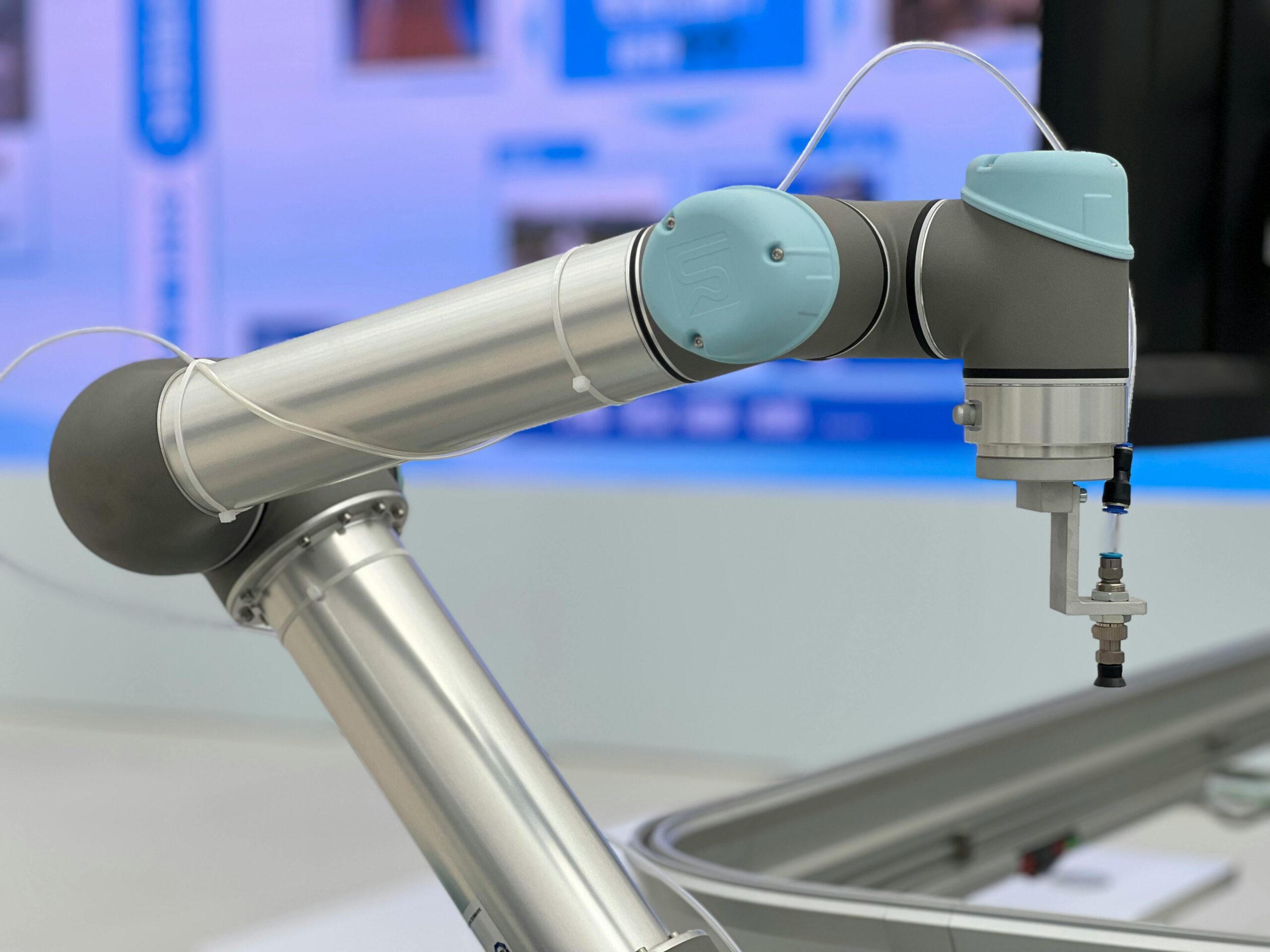
Areas such as mechanical engineering, innovative composites, high-speed machining, non-destructive testing, complex structures, robotics, and cobotics are key drivers of industrial development in Nantes’ aerospace sector. These technologies help lighten aircraft structures, automate systems and processes, and enhance competitiveness.