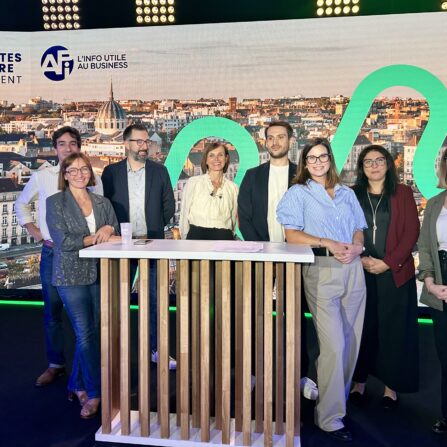
Global health: a look back at an immersive day in the heart of innovation in Nantes
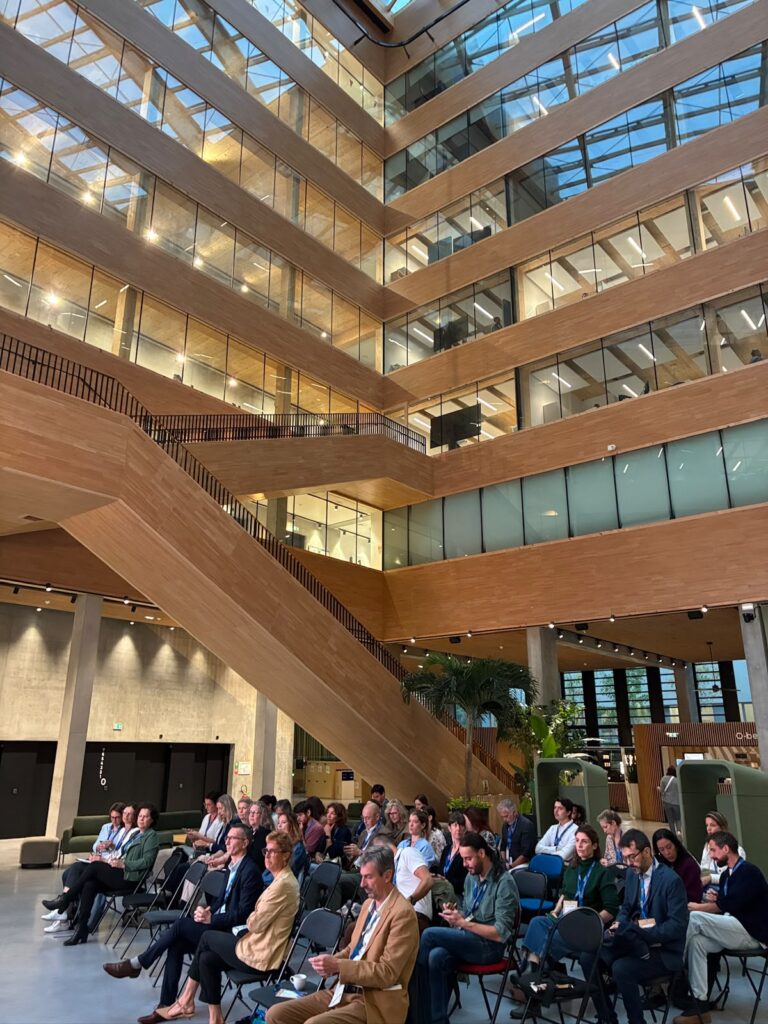
To kick off the event, Sandrine Gauvry, who is in charge of developing the global health sector at Nantes Saint-Nazaire Développement, reiterated the goal of the day: to allow participants to share their experiences, learn about local stakeholders and projects, and, above all, foster new partnerships.
1. La Poste: From Local Services to Health Data Sovereignty
First stop of the morning: La Poste’s Maison de l’Innovation. Virginie Rigoulot, the group’s regional development representative, presented this facility, which brings together 1,500 digital experts and houses a cybercrime unit operating 24 hours a day, 7 days a week. This introduction clearly illustrates the new challenges facing the healthcare sector: data security, access to care, an aging population, and strain on medical resources. The visit also provided an opportunity to gauge the scale of La Poste Santé Autonomie’s operations, which involve more than 10,000 employees. Its offerings combine local, people-centered services with digital solutions, including home care and monitoring, hospital software, telemedicine, secure data hosting, and the utilization of health data. Among the innovations presented was Dalvia Santé, a platform that integrates generative AI applications, including the synthesis of medical records and a voice-activated consultation assistant. The goal remains to position technology to serve healthcare professionals. “First, we look at what the medical field needs, what the care team needs, in order to propose a solution,” as emphasized by the speaker in charge of innovative healthcare projects. This approach sums up the challenge well: building innovation based on real-world use cases, not the other way around.
2. Doctolib: AI to Free Up Time for Healthcare Professionals
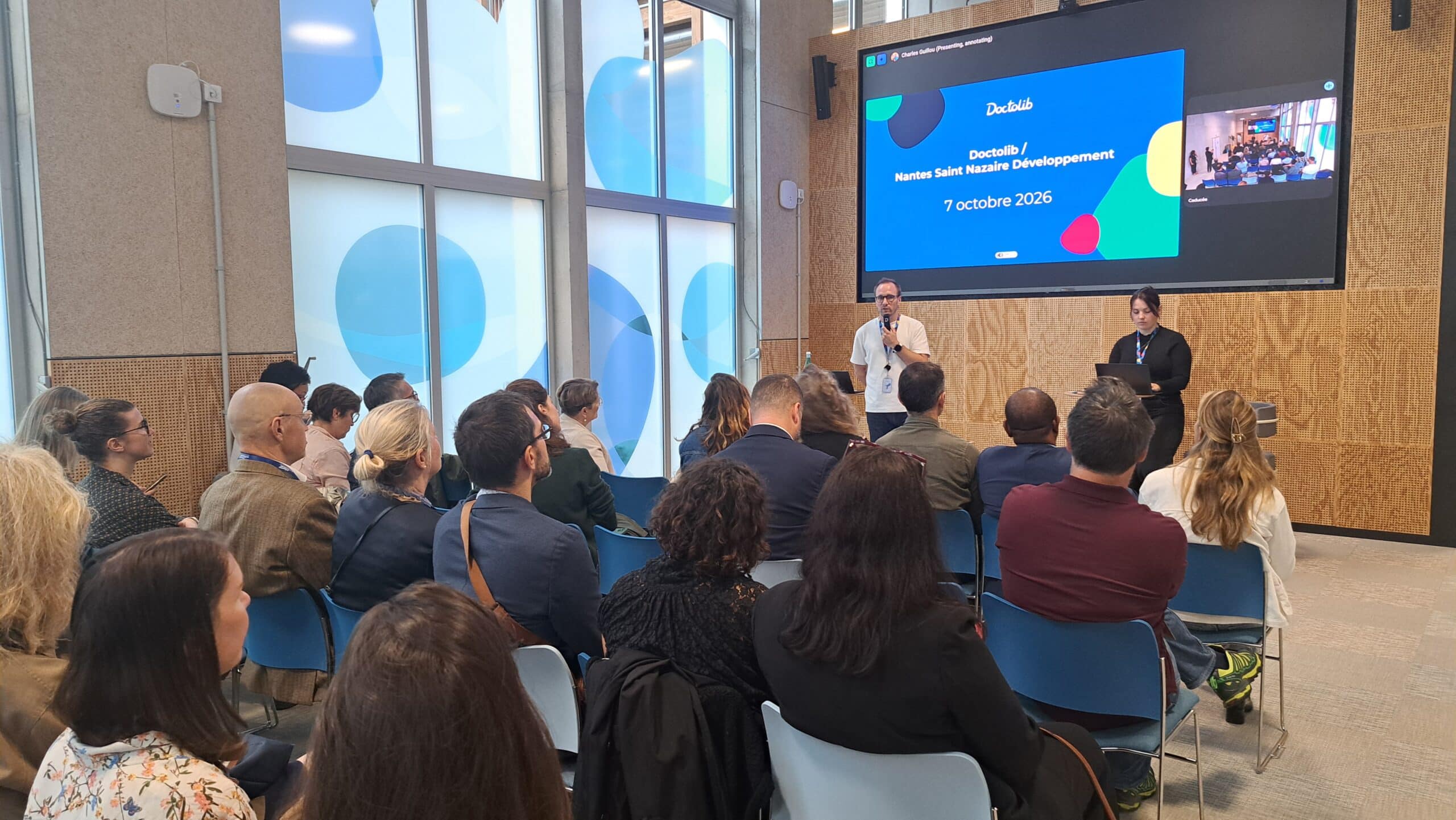
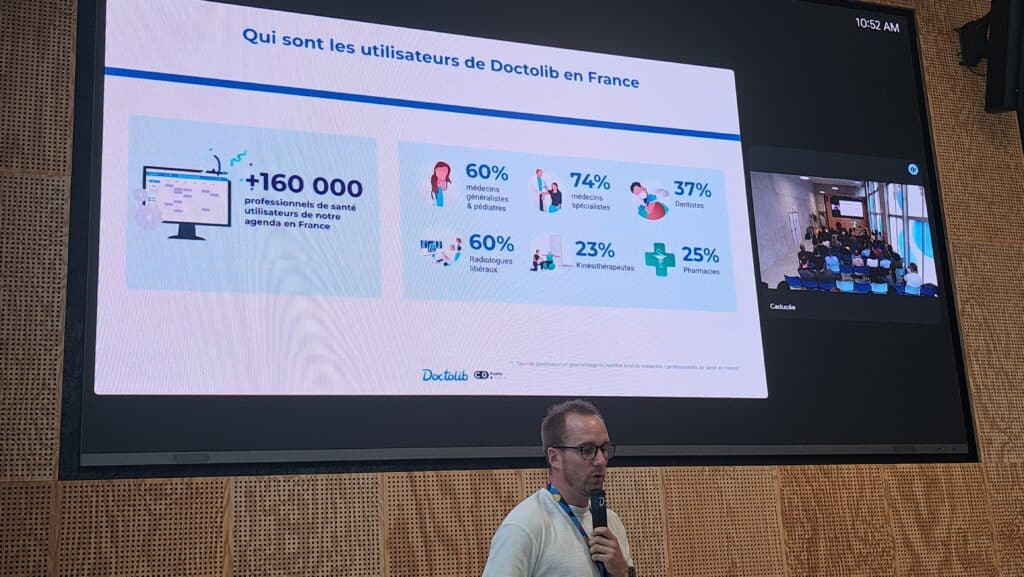
The second stop was at Doctolib, where Charles Guillou traced the evolution of a platform that initially focused on appointment scheduling into a much broader range of services for patients and healthcare professionals: medical software, care coordination, prevention, teleconsultations, and, now, artificial intelligence. Participants were introduced to the consultation assistant, developed in 2024. With the patient’s consent, the tool transcribes the consultation and provides the healthcare professional with a structured summary for the patient’s medical record. The promise is very concrete: “More time to talk with you, less administrative work for the healthcare professional.” ” Charles Guillou emphasized the need to support healthcare professionals as they adapt their practices: “We can offer the best product in the world. But if we don’t support practitioners through this transition today, it won’t work.”
The Doctolib team also discussed the reasons behind Doctolib’s expansion into Nantes in 2020.
It’s an attractive region, with a large talent pool and infrastructure close to Paris. Nantes is a city that holds a special place in Doctolib’s history because the Nantes University Hospital was the first university hospital to partner with us and use our solutions. Since then, we have forged strong partnerships with the Nantes ecosystem, including 4 hospitals, 2 clinics, 6 nursing homes, 2 healthcare professional associations, 28 multidisciplinary healthcare centers, and more than 1,700 independent healthcare providers.”
3. The University Hospital’s Health Innovation Hub: Turning Data into a Driver of Research and Innovation
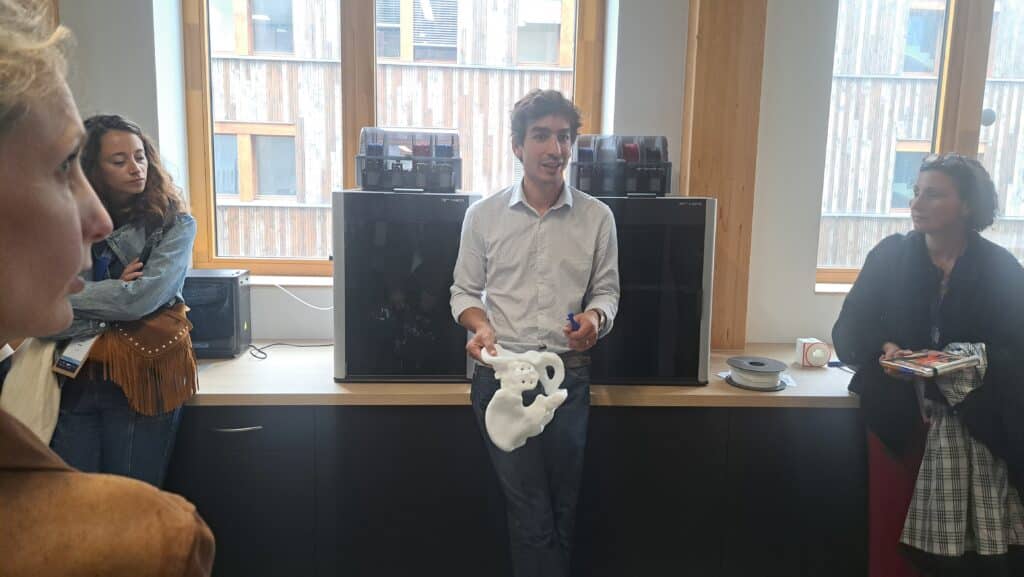
Another highlight: the Nantes University Hospital’s Health Innovation Hub, where Etienne Bendjebbar, head of innovation at the Nantes University Hospital, demonstrated how hospital data can serve as a catalyst for collaboration among healthcare providers, researchers, startups, and data specialists. A prime example: a Data Challenge focused on pediatric data. The project plans to make anonymized data from approximately 15,000 patients who participated in the university hospital’s clinical trials available so that data scientists, researchers, students, and startups can work on a medical problem. “The goal is to have researchers and startups work with hospital databases, as part of our effort to leverage our health data,” explains Etienne Bendjebbar. One of the stated goals is to develop models that enable better risk assessment in pediatrics and contribute to improved patient care. Another specialty of this Health Innovation Hub—a pioneer in France—is its commitment to supporting healthcare professionals on their journey as intrapreneurs. “Three projects are currently underway in the field of intrapreneurship,” he noted with satisfaction. For innovative companies, this initiative also illustrates the opportunities for collaboration offered by the Nantes ecosystem, at the intersection of healthcare, research, and technology.
A day to bring together businesses, healthcare providers, and innovators
Beyond the technologies presented, the event highlighted a common theme: innovation in healthcare is a collective effort. Two companies invited to pitch were able to attest to this. Optimpharma, founded by Soumeya Ben Aïssa and focused on the reuse of medications, and Redeem Médical, led by Clémence Cornet, which specializes in the reuse of splints. Other organizations supporting healthcare companies—Atlanpole Biotherapies, the CCI Nantes Saint-Nazaire Health Business Club, and TGS France—also took advantage of the networking time during the lunch hosted at GINA to present their service offerings. From the needs of healthcare professionals to corporate expertise, research, data, and experimentation, it is the ability of these stakeholders to work together in Nantes that enables innovations to move from concept to practical application.
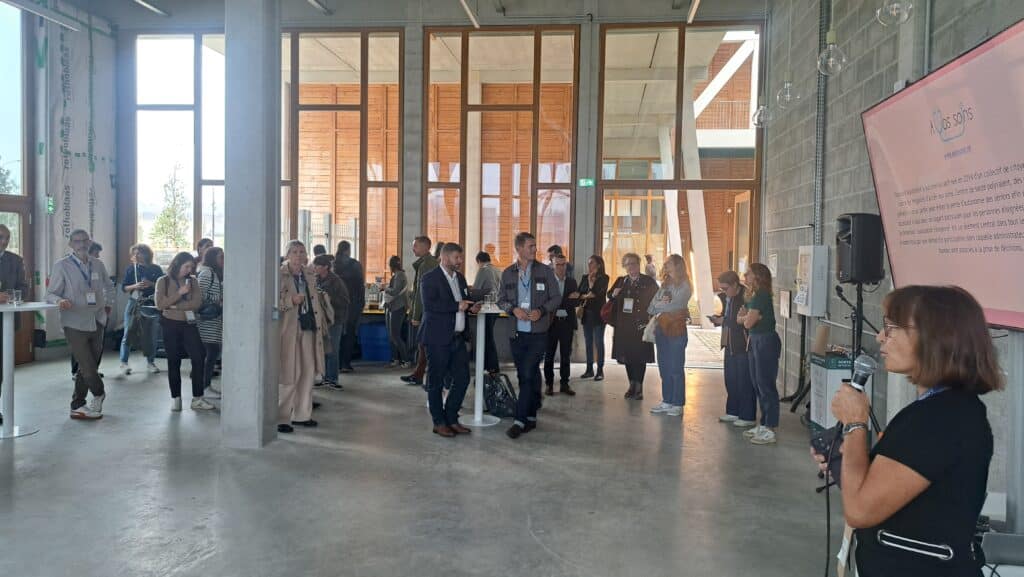
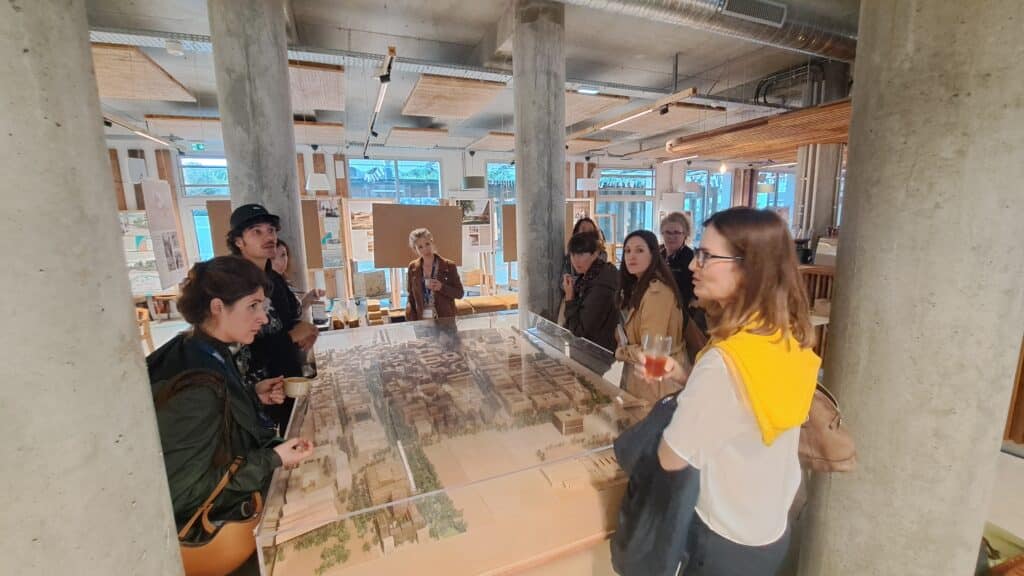
“The goal of this event was to ‘encourage the sharing of experiences and, why not, foster new collaborations,‘” Sandrine Gauvry noted. The event concluded with a presentation on the development project for the Île de Nantes, where health is at the heart of all transformations, as noted by Samoa, the organization in charge of the project. For leaders and companies in the health, digital, and innovation sectors, this immersive event showcased a region where collaborations between public entities, hospitals, and businesses can serve as a foundation for new projects.
A healthcare project in Nantes?