MIPIM 2025: projects that shape a sustainable, dynamic, creative, and committed region
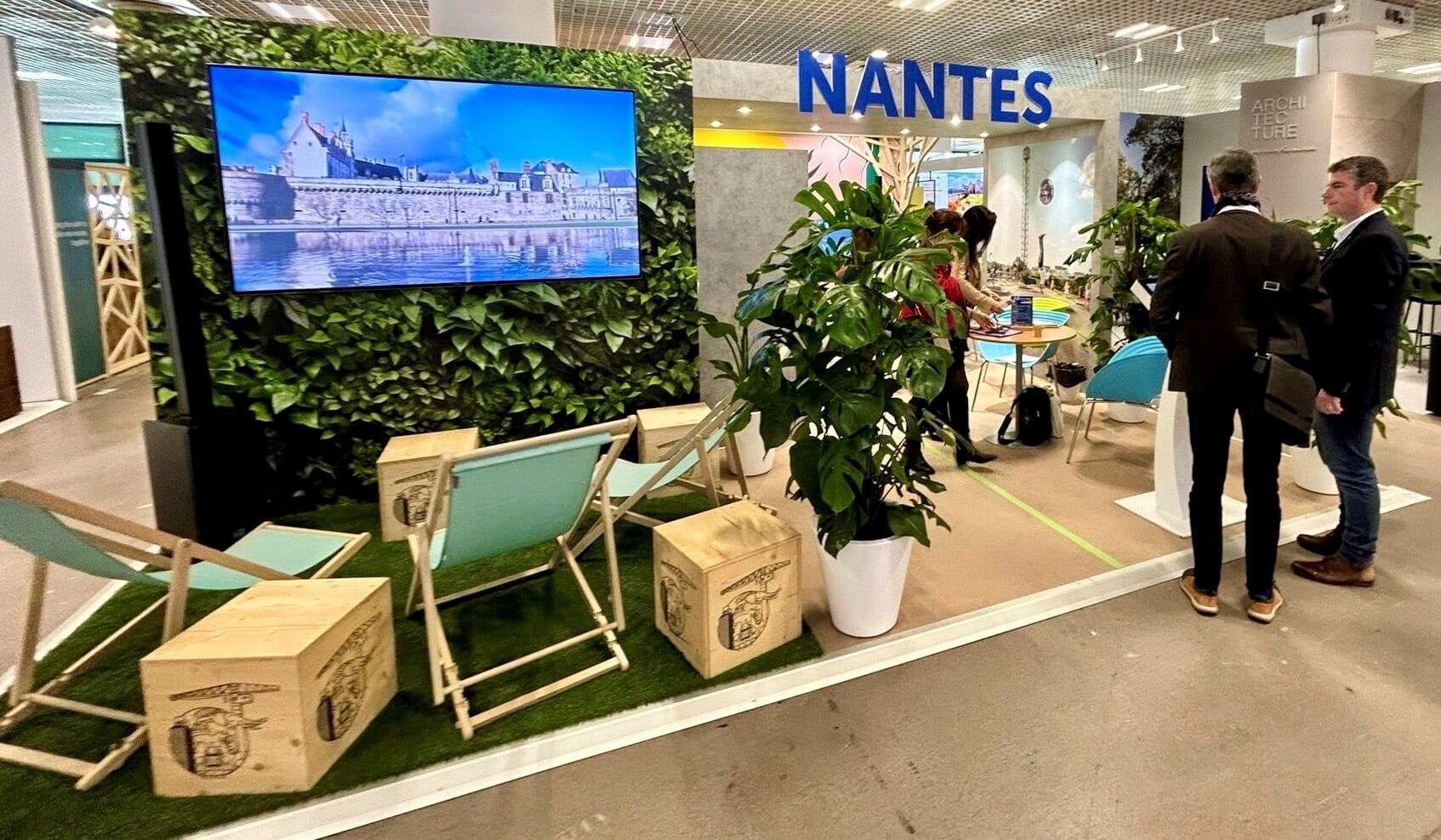
As an economically dynamic region, Nantes Métropole supports the emergence of new low-carbon production models and the development of spaces dedicated to these activities. Among the projects presented, the renovation of the Tour Bretagne, an iconic symbol of Nantes; the major cultural project known as the Cité des imaginaires—a large Jules Verne museum on the banks of the Loire River across from the Jardin Extraordinaire; and the new university hospital district, unique in Europe, currently under development on the Île de Nantes.
“In Nantes, together with all of our partners, I am leading a project that addresses the need for an ecological transition and solidarity among all people. To achieve this, we have launched a €20 million housing construction stimulus plan, we are strengthening the role of nature, and we are integrating the circular economy as a guiding principle in all the projects we undertake,” said Johanna Rolland, mayor of Nantes, president of Nantes Métropole, and president of Nantes Saint-Nazaire Développement.
Here are the main projects presented at MIPIM 2025:
- The Île de Nantes: A diverse 337-hectare area that has been undergoing transformation for more than 20 years, the Île de Nantes has entered a new phase in its history. Nantes Métropole and SAMOA have selected the consortium D’ICI LA / Atelier Georges / H2O as the new urban project management team for the Île de Nantes, effective January 2025 and for the next 8 years (2025–2032). Three key priorities have been established for this new phase of the Île de Nantes’ urban transformation: a large 10-hectare park facing the Loire River, a new residential neighborhood, and a project designed in collaboration with residents.
- Pirmil-Les Isles: Nestled south of the Loire River, between Nantes and Rezé, the Pirmil-Les Isles project offers a rare opportunity to integrate real estate development with the surrounding natural environment. It is one of five major urban projects that will reshape the city of tomorrow along the Loire River. Selected as part of the France 2030 initiative and designated in 2021 as a “sustainable city demonstrator” for the development of the Basse-Île sector, the overall Pirmil-Les Isles project is a true prototype of the “city-nature” concept. With the eventual construction of 3,300 housing units, the project calls for the planting of nearly 50,000 trees. The restoration of the existing soil and riverbanks is also central to the project, aimed at fostering the development of wetlands. Furthermore, the project places a strong emphasis on sourcing construction materials, with a collective effort to promote the reuse and use of bio-based and geosourced materials.
- Matera: What sets this project apart—located in the heart of the former Mellinet military barracks—is its construction system, which features wood-frame facades filled with prefabricated hempcrete panels manufactured in a workshop, all supported by a wood structure rising up to six stories: a first in France (developer Icéo, a subsidiary of BatiNantes).
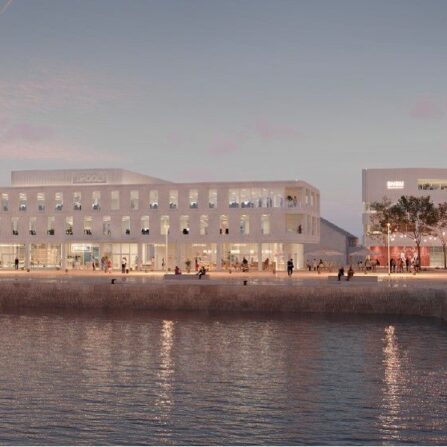
- The Cité des imaginaires—the Jules Verne Museum: The former “CAP44” building, a testament to Nantes’ industrial past and the first building constructed of reinforced concrete using the “Hennebique process,” is set to begin a new chapter. By the end of 2028, it will be fully renovated to become the future Cité des imaginaires, home to the Jules Verne Museum, dedicated to the work of the Nantes-born author. The project was awarded to the team formed by the Dutch firm Neutelings Riedijk Architects and the Nantes-based firm ARS Architectes, who are continuing their work by combining boldness and simplicity, respect for and celebration of heritage, environmental performance, and connections to the “Jardin Extraordinaire,” the city, and the Loire River. The project preserves part of the existing building and reveals the Hennebique structure as a relic, while developing new uses within new structures.
- The Tour Bretagne: An iconic landmark on the Nantes skyline, the Tour Bretagne will be renovated to become a mixed-use space (retail, housing, communal areas, and “third places,” with the goal of reopening its panoramic terrace) that is more open to the city and its residents. By choosing to renovate the existing site rather than demolish and rebuild it, this project is fully aligned with environmental goals and land conservation efforts. Opting for renovation will result in carbon savings as well as a significant reduction in construction-related traffic. Compared to demolition and reconstruction, this approach will save more than 14,000 m³ of concrete and 1,600 metric tons of steel, representing a carbon savings equivalent to 7,000 metric tons of CO₂.
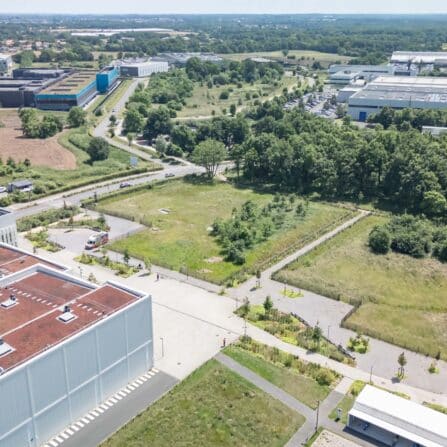
- La Forge des Batignolles: A symbol of Nantes’ industrial renewal, this site—which is part of the France 2030 plan—has the dual objective of breathing new life into future technologies capable of addressing the challenges of decarbonization and keeping industry in the city. With the aim of fostering cross-sector collaboration, it caters to companies in both high-tech sectors (artificial intelligence, robotics, and electronics) and low-tech sectors (Reuse, Green Building, recycling, and packaging).
- The Future Health District: A unique and iconic project, the construction of the future University Hospital will serve as the centerpiece of a new health district, which will include the School of Health Sciences and the Health Research Institutes. A health innovation campus will represent the economic component of the health district, with, ultimately, no less than 30,000² dedicated to Nantes’ health innovation ecosystem.