“Nantes Saint-Nazaire remains today, at the heart of a region, a driving force of offshore wind in France.”
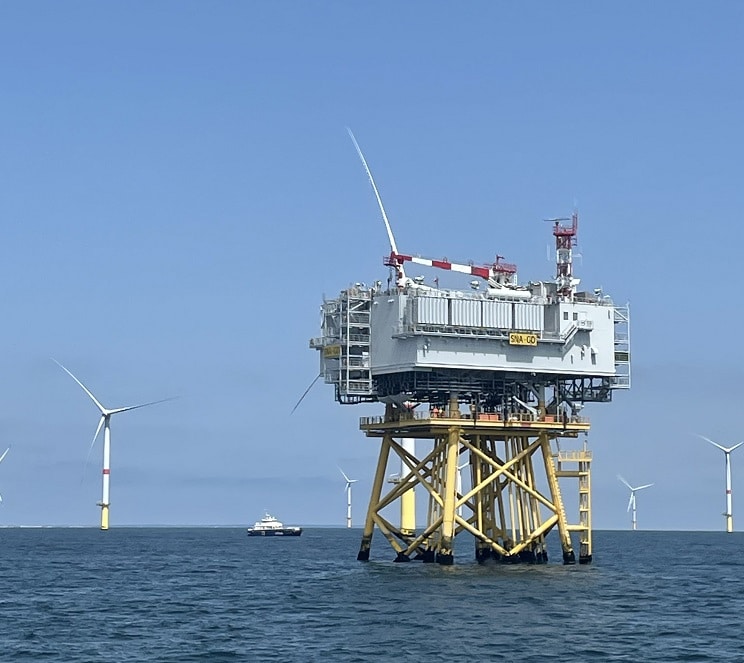
After hosting France’s first offshore wind farm, Nantes Saint-Nazaire confirms its leadership role in the MRE sector. What makes this ecosystem unique in Europe?
The Saint-Nazaire offshore wind farm, the first in France, remains a great showcase for the region both nationally and internationally. It is the result of work carried out over more than a decade, not by chance, but as the outcome of a combination of strengths present in Nantes Saint-Nazaire: Chantiers de l’Atlantique, the establishment of GE – the only turbine manufacturing plant in Western Europe –, the strategy of Nantes Saint-Nazaire Port, specialized in heavy handling, and the presence of a local supply chain capable of meeting industrial needs in production, logistics, and maintenance of offshore wind farms.
The region has always been a pioneer in the offshore wind sector, thanks to recognized maritime expertise, then with wind turbines tested at Le Carnet, the first floating wind turbine Floatgen developed in partnership with Centrale Nantes and regional stakeholders and tested on SEM-REV. In terms of concentration of facilities, the region is quite unique, and few territories in Europe can rival this combination of assets found in Nantes Saint-Nazaire.
Nantes Saint-Nazaire remains today at the heart of a region that is a driving force in offshore wind in France. We benefit from a whole ecosystem at the cutting edge of innovation, with a concentration of players ranging from research with Nantes University, support for innovative projects by Pôle Mer Bretagne Atlantique, to testing and prototyping with the SEM-REV site operated by the Open-C Foundation, as well as the test basins at Centrale Nantes, and finally industrialization through the Neopolia network at the end of the value chain, positioning itself on the industrialization and commercialization phases.

The Neopolia cluster structures and drives this industrial network. What role does it play in the current context?
In marine renewable energy (MRE), markets are very long-term, with tenders lasting more than 10 years. The role of Neopolia is to support companies in the upstream phases of projects by creating favorable conditions for integrating SMEs and mid-sized companies into the industrial frameworks of project developers.
Neopolia’s role is to capitalize on the strength of the collective to access markets that small and medium-sized companies could not reach alone. It helps companies gain visibility and acts as an entry point to structure multi-expertise offers and respond to calls for tenders.
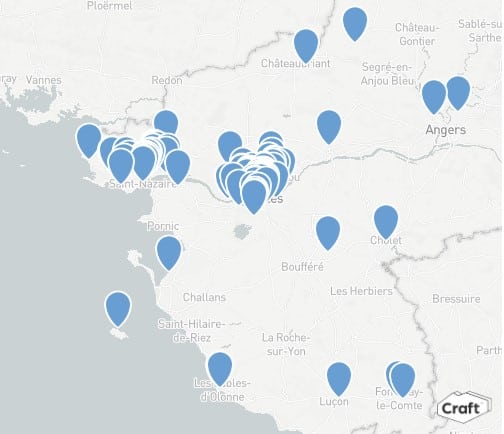
Out of Neopolia’s 200 members based in Pays de la Loire, more than 70 companies are involved in offshore wind and MRE, a large number of which are located in the Nantes Saint-Nazaire area. This also involves organizing events where members can engage with buyers and contractors in the sector.
Finally, we have a positive lobbying role, promoting local expertise to the State and all institutions to preserve employment, skills, and innovation. This is work we carry out with other territories as part of the France Offshore Renewables cluster alliance.
The Seanergy event takes place on May 19 and 20 in Nantes. Why is this event important for industry stakeholders?
Seanergy is truly the must-attend event for MRE in France today. We are fortunate to host it again in our region. It brings together between 3,500 and 4,000 participants, 200 exhibitors, and 30% international attendees, including major foreign companies, which is a strong signal. It provides international visibility for our companies and our region, with great opportunities to showcase projects and present the hosting capacities of territories. In Nantes Saint-Nazaire, the last edition included visits to the Saint-Nazaire wind farm and the region’s testing sites and platforms, including the ocean engineering test basins at Centrale Nantes.
Neopolia’s role is to support its member companies by giving them visibility at this event. An event that has the advantage of addressing MRE in a broad sense, particularly in light of the recent PPE 3*, which includes new tidal energy projects.
How is the region positioned in floating wind?
Indeed, given sea depths, if we do not develop floating wind, we will quickly hit a wall. Our region is very well equipped to develop this technology, starting with the SEM-REV platform, one of the first floating technology testing laboratories in France and even in Europe. This facility is managed by the Open-C Foundation, which encourages innovative companies to deploy new technologies on its site. This is the case with Floatgen and soon Eolink in 2027, two floating demonstrators on the same site, which is quite remarkable.
Another strength is Nantes Saint-Nazaire Port, which is developing to accommodate all these floating projects through the Eole project, within the broader context of the major decarbonization plan for the Nantes Saint-Nazaire region. Hosting floating wind turbines is a key challenge for a port that currently depends 70% on fossil fuels.
We also have a wide range of companies capable of meeting the challenges of floating wind, in terms of engineering, equipment manufacturing, and maintenance.
What also matters greatly for companies is knowing that they are supported here by a dynamic institutional ecosystem, including Nantes-Saint-Nazaire Développement, the Nantes St-Nazaire Chamber of Commerce, Neopolia, the Pays de la Loire Region, and Pôle Mer Bretagne Atlantique.
If we do not develop floating wind, we will quickly hit a wall. Our region is very well equipped to develop this technology.
Given the slowdown in offshore wind until 2030, with no new wind farms in France, how will Neopolia members navigate this period, in France and in Europe?
Indeed, over the next 3 to 4 years, Neopolia will need to demonstrate its full value. We will need to ensure that companies retain their talent and preserve their expertise. One key area of work is increasing diversification to access European markets, by connecting companies with European clusters, as we will do by welcoming a Danish delegation during the Seanergy event, for example. Neopolia, as part of France Offshore Renewables, has also just signed a MoU with Norwegian partners to share best practices in floating wind. We are working to harmonize best practices with several European countries, including Belgium, Spain, and Greece.
This will also be an opportunity for Neopolia to continue structuring the region’s industrial offerings and communicating them very early to project developers, in order to integrate local capabilities into future industrial frameworks. All of this will help maintain readiness, because from 2030 onwards, new wind farms are expected to enter the construction phase.
Regarding the offshore wind context at the international level, what are the dynamics and how are France and the region positioned?
The offshore wind market is growing by 12 to 14% per year globally. It is strongly driven by Northern Europe and China. While France is relatively new to this market, it remains one of the most dynamic countries in Europe in terms of awarding new wind farms (only four European countries in 2025) and planning future medium-term projects, with 2 GW installed in 2026 and a target of 18 GW installed by 2037. Neopolia will have a role to play in this ambition, supporting development in France as well as in Southern Europe.
* PPE 3: Multiannual Energy Programming presented on February 13, 2026, by the French Government, outlining France’s energy policy to address energy consumption and production challenges over the 2026–2035 period.
- Learn more about Neopolia