"Certifications describe how we operate; our mission describes what we do it for."

At the end of 2025, France had 2,298 mission-driven companies, representing more than one million employees, according to the Observatory of Mission-Driven Companies. This trend is particularly strong in the Pays de la Loire region, which is home to 160 such companies, including 85 in Loire-Atlantique, a “pioneering” department with nearly 19,000 employees.
The Role of Ambassadors: Networking and Building Relationships
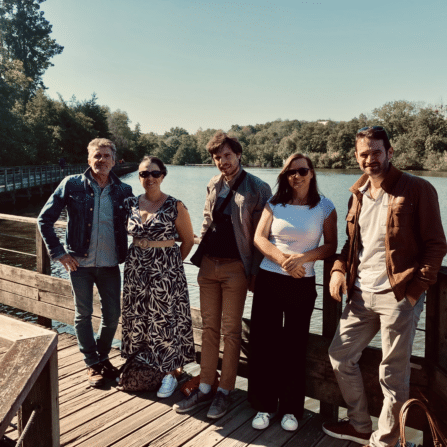
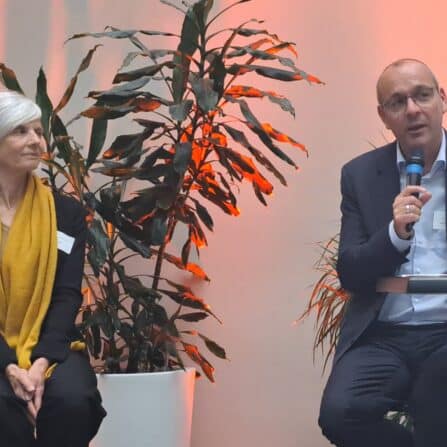
At the local level, ambassadors represent the voice and values of the national Community of Mission-Driven Companies (CEM). Their primary role is to raise awareness of and promote the “mission-driven company” concept among local businesses, particularly by coordinating the network of companies committed to this initiative. In practice, they organize local events—ranging from themed meetings to simple after-work gatherings—to foster peer-to-peer exchanges. While training materials, themed webinars, and the resource library are managed and provided by the national CEM, the regional link is essential. “ ‘The regional ambassador also provides that sense of proximity and human connection that can’t be achieved through remote interactions alone,’ emphasizes Edward Pallu, mission manager at UMR. This proximity helps bring the network to life and facilitates the sharing of concrete feedback—which is essential for companies considering getting started.”

Why and How to Become a Mission-Driven Company
There are many reasons to adopt the “status” of a mission-driven company. These may stem from a desire to go further in affirming the company’s social and environmental commitments, or from the need to align the board of directors and shareholders toward a common goal. According to Edward Pallu, “at UMR, the status of a mission-driven company allowed us to enshrine strong mutualist values in the articles of incorporation at a time when the mutual was changing its legal status.”
However, the strongest argument—one shared by both ambassadors—lies in the mission’s role as a tool for steering and arbitration, particularly in times of uncertainty. “Once you’re a mission-driven company, that serves as the backbone. It makes all decisions easier. The criteria for decision-making, launching projects, and steering the company are clear and shared, which makes decision-making easier,” explains Ingrid Berthé, co-CEO of the communications agency B Side. In short, being a mission-driven company requires the business to maintain the dual objective of economic development and social or environmental benefit in all its decisions. This framework prevents the company from reverting to a purely profit-driven approach when making difficult trade-offs.
Unite employees around a common goal
In addition to strategic alignment, the status of a mission-driven company is a major driver in terms of human resources, in that it helps unite employees around a common goal. The effects are also felt internally: motivation, attractiveness, and team engagement, with “93% of our employees saying they feel prouder and more motivated since we became a mission-driven company.”
Distinguishing Between Why and How
CSR certifications, B Corp, SSE status… they all play a role. But for Ingrid Berthé, the mission adds a fundamental element: “Certifications describe how we act; the mission explains what we’re working toward.” ” For some “impact-native” companies, the status of a mission-driven company serves to “structure the approach” and establish clear performance metrics.
The company’s status as a mission-driven organization drives and guides its decisions
While becoming a “mission-driven company” requires amending the company’s articles of incorporation, it is first and foremost about transforming the business model and the decision-making framework.
For B Side, the impact was immediate: the project transformed the company’s core business, its client portfolio, and the types of projects it supports. “Our first step was to redefine our project evaluation framework. This led us to turn down certain projects, particularly when we were being pushed toward greenwashing. We flatly refuse such projects and use the opportunity to educate people,” emphasizes Ingrid Berthé.
At UMR, this commitment has led to major investment decisions. “We are currently rolling out a 350-million-euro investment project to support longevity and contribute to a better quality of life in the future. This initiative was launched in particular by the members of the task force,” says Edward Pallu.