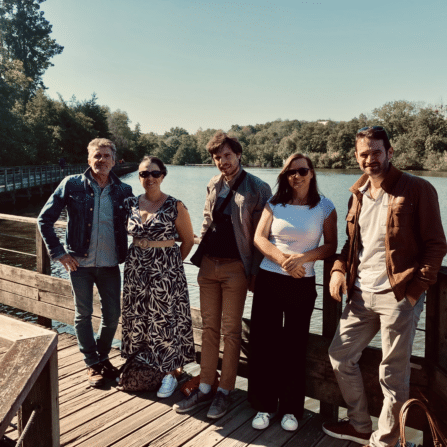
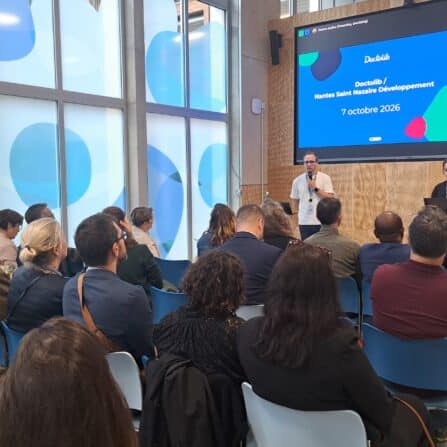
"Moving to Saint-Nazaire means sharing in the pride of an industry that is evolving, becoming carbon-free, and providing solutions."


Saint-Nazaire ranks first in the Loire-Atlantique department in the best places to live rankings*. How has the city’s transformation—which has been underway for several years—helped boost its attractiveness?
Saint-Nazaire is going through a great period, and its residents are justifiably proud. It is no longer the bleak, gray, hard-working city it was once described as. Now, Saint-Nazaire’s assets are coming to the fore: 20 beaches, an exceptional waterfront, a landscaped park right in the heart of the city, high-quality public services, and unique shops…
I have often used the phrase “city of pleasure,” and I am committed to building a city where people certainly work, but where they can also spend time, get away from it all, stroll, and have fun. I have the utmost respect for those who keep the city’s industrial heart beating. They are the foundation of our identity. I want to combine this strength with the gentle way of life between the Loire, the ocean, and Brière.
Tourism is obviously a key driver of this transformation. It brings about a shift in how the city is used, by enabling restaurants, bars, and shops to thrive year-round. It also changes the way people see things, because when visitors come to see you, you start to view your city differently, and your perceptions shift.
From now on, Saint-Nazaire is seen as a garden city by the ocean—deeply modern, resilient, and attractive—if we may use that word—and we’re going to build on that image.

, Mayor of Saint-Nazaire

To what extent do large-scale urban projects help transform the city and improve quality of life?
Embracing Saint-Nazaire’s identity as a “garden city by the ocean” means providing a high quality of life for all its residents. That is what we strive to achieve through our urban projects. The city has set aside large areas for nature and agriculture through a program to protect agricultural and natural spaces. Our urban projects now aim to create spaces, walking paths, and parks that are as close as possible to residents.
That’s exactly what we’re doing by showcasing the banks of the Loire in Petit Maroc with the new Rives d’Estuaire Park and by revitalizing neighborhoods such as La Trébale—with the creation of Toucan Park—and Moulin du Pé—with a green corridor leading to the Bois d’Avalix.
However, we do not want to create “green enclaves.” We take great care to ensure seamless connections for pedestrians, cyclists, and bus riders, as evidenced by the exceptional success of our Helyce buses, the newest models of which are electric.

In recent months, we’ve been seeing more and more startups setting up shop in Saint-Nazaire, particularly in the industrial sector—but not only there…
Saint-Nazaire was born of industry. I hope that this history—between the city and its shipyards, between the city and aviation, but more broadly between Saint-Nazaire and the act of producing—will continue. Producing is not an insult. Some time ago, a member of parliament tried to criticize me by calling me a “productivist.” I stand by that. Yes, to maintain our social contract, I believe we must produce—otherwise, where will our wages come from? Yes, to succeed in the ecological transition, I believe industry is the solution—otherwise, where will our products and energy come from? Yes, to maintain peace, we need balance—and therefore an aircraft carrier that we can build right here—otherwise, who will respect us?
In the summer of 2022, as France was experiencing a heat wave, the residents of Saint-Nazaire watched as ships loaded with wind turbine blades sailed by to complete France’s first offshore wind farm. It’s a tangible solution. It’s a source of pride.
The industrial startup ecosystem, French Tech, the Blue Lab, and the SPI carry on this productive legacy. They draw part of their roots from it and breathe new life into it. It’s a wonderful dynamic, and we wanted to symbolically place it at the heart of the city, at the Paquebot, just a stone’s throw from the Maison de l’Entreprise.
Moving to Saint-Nazaire—and more broadly, to the metropolitan area—means sharing in the pride of an industry that is evolving, decarbonizing, and providing solutions. It means providing your employees with an exceptional quality of life. It means drawing on the training, research, and development centers we have locally, as well as those in Nantes.
To make the ecological transition a success, I believe industry is the solution—otherwise, where will products and energy come from?

Culture and sports are key drivers for attracting residents, talent, and businesses. How does the city involve businesses in this strategy?
I’ve talked about the living environment and urban planning. But a city is more than just that. It also thrives on its sports and cultural initiatives. It’s a whole. With our media libraries, our movie theaters, the Theater, the House of Foreign Writers and Translators, the VIP, Les Escales, and our outdoor artworks scattered throughout the city, we keep the city’s heart beating to the rhythm of ideas, music, and performances from around the world. This is our vision of culture, and it will also inspire a new direction for the Grand Café, which will now be dedicated to photographic expression.
We’re also known for our major community events, which foster a unique sense of togetherness—such as Les Fééries de Noël, La Grande Tablée, Côté Nature, and Grande Marée. It’s important to be open and welcoming, avoiding an exclusive clique that, under the guise of high standards, can sometimes lead to isolation.
I see this sense of openness reflected in sports—from volleyball to soccer, boxing, basketball, and track and field—and Saint-Nazaire offers a wealth of athletic opportunities.

Many companies support this initiative, either directly by working with project leaders or through the Mécènes endowment fund in Saint-Nazaire, which brings together major employers in the region. Everyone here understands that we need to stick together and move forward as one.
How do you plan to address the housing pressures that are expected to increase in the coming years?
Our success has not come without challenges. Housing is one of them. Transportation is another. Our goal is to successfully tackle the industrial and environmental challenges ahead of us without upsetting our balance. Today, thanks to the historic commitment of this city’s various political leaders, we have nearly 30% social housing, with a well-located and well-maintained housing stock. I hope we can maintain this solidarity, because otherwise it would mean pitting jobs against housing. In this era of ecological transition and purchasing power, that is unsustainable. I therefore intend to do everything I can to break the housing impasse in Saint-Nazaire. I have proposed the creation of a local real estate development agency to take things further—and, above all, faster. I am confident that it will become a reality.
The same goes for transportation. We’ve greatly improved traffic flow in the city and even in the industrial and port area, but our success has been such that we risk reaching capacity in the future. The government must therefore help us reach new investment milestones.
Photos ©Christian Robert / City of Saint-Nazaire
*Source: 2026 Cities and Towns Ranking